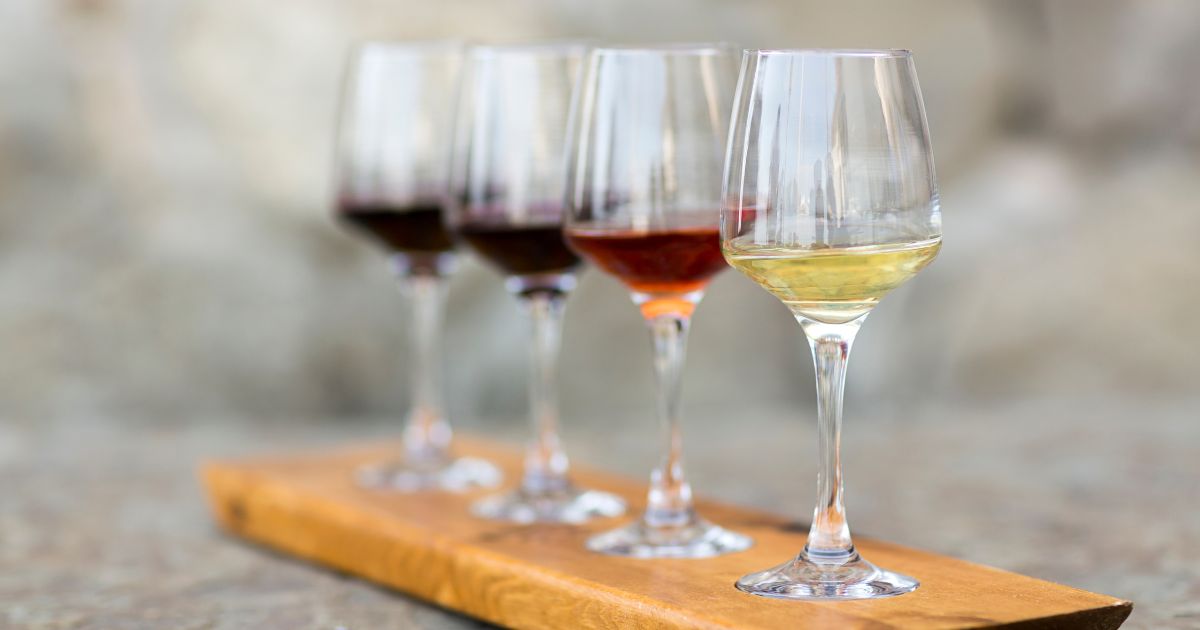
When someone says "wine tasting," you might immediately picture a group of people seriously swirling their glasses as if auditioning for a French art film. But real wine tasting isn't about mystery or complicated jargon; it's about attention, discovery, and understanding what you like.
In this blog, we'll guide you through all the steps of proper wine tasting, just like professionals do, but in an accessible way.
Why wine tasting is more than just "having a taste"
Wine tasting is about two things: conscious observation and making connections. Not about fancy terms. Not about a competition of "who smells the most things?" You determine what you experience, and that is always valid.
But... the technique helps you discover more. And we will now carefully go through that, step by step.

Step 1: Looking — the visual introduction
Always start by looking. It tells you an unexpected amount:
Colour
Clear lemon yellow, golden yellow, ruby, garnet... the hue often gives an idea of ripeness, grape variety, and age.
Intensity
Light, medium, or deep. The intensity of the colour often provides information about the taste, concentration, and structure of a wine.
Clarity
Brilliantly clear? Or slightly cloudy? Cloudy isn't necessarily "wrong"; it could be an unfiltered or natural wine.
Step 2: Smelling
This is often where wine tastings go wrong: people swirl immediately. But smelling first without swirling gives you the first, pure impression of the wine.
First nose (without swirling)
Hold the glass still. Put your nose in it (yes, really in it) and breathe normally. What do you notice? Fresh? Fruity? Neutral? Spicy? This is the wine's "introduction."
Then swirl and smell again
Now comes the step that opens up aromas: swirling. Swirl gently, let oxygen do its work, and smell again.
Second nose (after swirling)
You'll now smell much more nuance:
- ripe or fresh fruit
- floral notes
- herbs, spices
- oak influences (vanilla, toast)
- mineral hints
You don't have to name anything complicated. Think simply: what direction is this going in? What do you recognise?
Step 3: Tasting — flavour, structure, and mouthfeel
Take a small sip and let the wine coat your entire mouth. Here's what you want to pay attention to:
Acidity
Provides freshness, tension. Think lemon to yoghurt-worthy refreshing.
Sweetness
Not just sugar, but also the impression of ripe fruit.
Tannins (in reds)
That drying, puckering sensation. Fine? Firm? Rough? Soft?
Alcohol
Do you feel warmth? Or does the wine remain lean and cool?
Body (mouthfeel)
Light, medium, or full. Comparable to skimmed, semi-skimmed, or whole milk.
A little slurp technique is allowed: oxygen further opens up flavours, but do it subtly; you're not at a dentist's demonstration.
Step 4: Finish — how long does the flavour last?
The length of the flavour tells a lot about the quality of the wine. Short? Fine for fresh, accessible wines. Long? Often more complex and fuller. The wine lingers in your thoughts.
Short finish
0–5 seconds
The flavours disappear quickly after you swallow. Often suits: light, simple, fresh wines.
Medium finish
5–10 seconds
The flavour lingers noticeably, but not for an extremely long time. Often suits: good quality wines with balance.
Long finish
10+ seconds
The flavour remains distinct and layered. For top wines, this can even be 20–30 seconds or longer. Often suits: complex wines, wines with concentration, oak ageing, or bottle ageing.
Step 5: Interpreting — what does this wine tell you?
This is where tasting gets fun. Combine everything you saw, smelled, and tasted.
Ask yourself:
- What was the first thing you noticed?
- Which flavours lingered?
- What made this wine interesting (or not)?
- How would you describe it to a friend?
You don't need to use a sommelier's dictionary. If you say "sunny," "crisp as a cracker," or "soft as a Sunday," that's excellent.
Useful terms
Aromas
The scents of wine. Primary (fruit), secondary (fermentation, yeast), tertiary (ageing).
Balance
All elements come together: acidity, sweetness, tannin, alcohol, body.
Complexity
More diverse aromas and flavours that develop in your glass.
Terroir
What makes the place of origin taste: soil, climate, altitude — in short, the "earthy signature" of the wine.
Typicity
How recognisable a wine is for a specific grape or region.
Small exercise for wine tasting at home
Put two wines side by side that are clearly different, for example:
– a fresh Sauvignon Blanc
– a fuller Chardonnay
Or:
– a light-bodied Pinot Noir
– a firm Tempranillo
By following the six steps (look, first nose, swirl, second nose, taste, finish) each time, you'll notice how your brain gets better at making connections. And how fun it becomes to discover differences.
Finally: wine tasting is about attention & pleasure
Tasting doesn't have to be complicated. With the right sequence and a little calm, you'll suddenly discover much more. And that makes drinking wine even more enjoyable.
At Wijnhuis Cave, we are happy to help you explore that world in a relaxed way.
Would you like a pleasant wine tasting at home? We are happy to help you further.
Vera & Casper
Wijnhuis Cave 🍷✨